Steps to Transfer Vehicle Ownership Across States Online
If you bought a car in another state or moved to a new state with your current vehicle, you usually need to transfer the title and registration to your new state. The basic process is simple: get the signed title, gather your paperwork, check your new state’s DMV rules, Parivahan Sewa submit the application, pay fees and taxes, and finish any inspection or VIN check your state requires. The part many people miss is this: not every state lets you finish the whole process online. Some let you start online, some let you mail everything, and some still want you to show up in person.
What you need before you start
Before you open any DMV page, collect the main documents first. In most cases, you will need the original title signed by the seller or lienholder, a bill of sale, your ID, proof of insurance, and a title or registration application for your new state. Some states also ask for odometer details, proof of address, a lien release, or inspection paperwork.
A smart move is to look at the title closely before you do anything else. Make sure the names match, the VIN matches the vehicle, and there are no blank spots, crossed-out sections, or missing signatures. A paperwork mistake can slow the whole transfer down. California, for example, lists buyer and seller signatures, title paperwork, and fee payment as core transfer items, while Texas and New York also require state forms and identity documents.You can also read: Why Is My Driving License Not Showing on Sarathi (Parivahan)
Step 1: Get the signed title from the seller
This is the document that proves ownership. If you are buying from a private seller, make sure the seller signs the title exactly where the state requires. If there is a lien on the vehicle, you may also need the lienholder to release its interest before the transfer can move forward. California says a private sale transfer starts with the seller or lienholder signing the title and the buyer submitting it to DMV. Competitor guides say the same thing because this is the foundation of the whole process.
Step 2: Make sure any lien is cleared
A lot of out-of-state title problems happen because the car loan is not fully cleared. If the old title is still held by a lender, the new state may need the lienholder to send the title over or confirm ownership details before the transfer can be completed. Florida says that if the out-of-state title is with an out-of-state lienholder, you must contact that lienholder and request that the title be transferred to Florida.
Step 3: Gather the forms for your new state
Every state has its own version of the title and registration application. New York says out-of-state applicants need a completed Vehicle Registration/Title Application, original proof of ownership, proof of New York auto liability insurance, proof of identity and age, and payment for sales tax. Texas uses its own title and registration form and now requires proper photo ID for title and registration transactions.
This is why copying a checklist from another blog is risky. The broad steps are similar, but the exact forms, fees, deadlines, and proof requirements can change by state and sometimes by county.
Step 4: Check whether your state lets you start online
This is the step most people search for first. The honest answer is: maybe.
Some states offer online account portals for many motor vehicle services. Florida’s MyDMV Portal says eligible customers can access and request many motor vehicle services online after identity verification. New York lets out-of-state residents apply for registration and title by mail. California says title transfer paperwork can be submitted at a DMV office or by mail. Texas often routes title work through county tax offices, even though forms and instructions are online.
So if you want the simple rule, use this one: start online if your state allows it, but expect that the final step may still happen by mail or in person.
Step 5: Pay the taxes and transfer fees
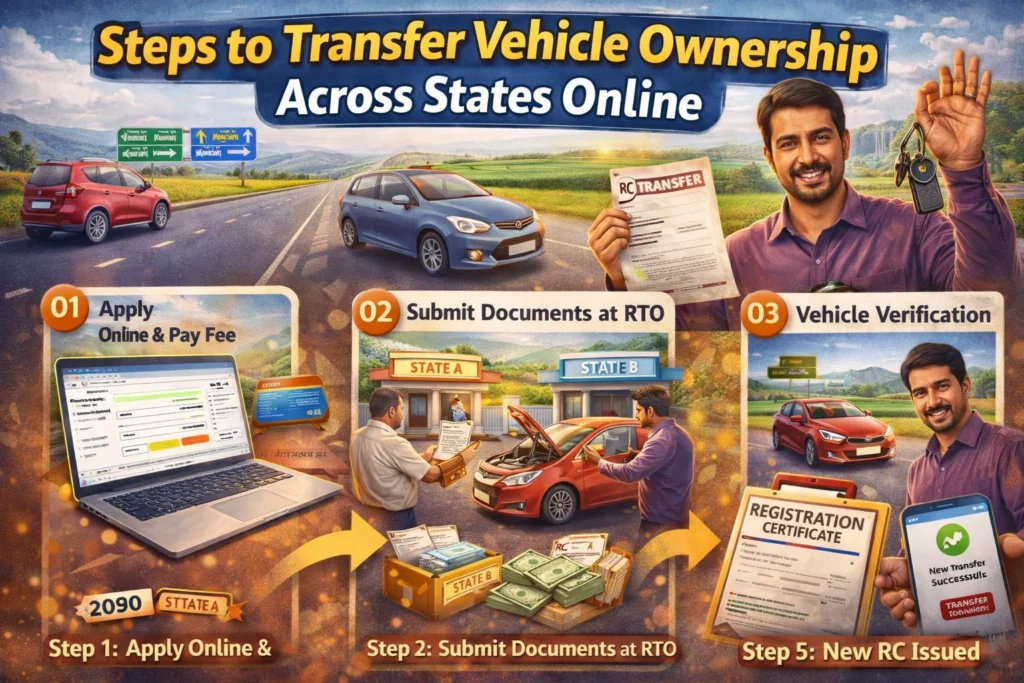
After your paperwork is ready, you will usually need to pay title fees, registration fees, and sales or use tax. These amounts vary a lot. Texas, for example, lists a title application fee, registration fee, local county fees, a vehicle sales tax, and an insurance verification fee for out-of-state vehicles. California says fees vary by transfer type. New York requires payment for sales tax as part of its out-of-state registration process.
A good tip here is to budget a little extra. Even when the title fee looks small, taxes, inspections, county add-ons, and mailing costs can push the total higher than expected.
Step 6: Finish any VIN, smog, safety, or emissions checks
Some states want more than paperwork. Texas says that if the vehicle is not subject to a commercial or emissions inspection, the VIN can be self-certified on the form. California includes smog-related forms among the documents that may be required for transfer. New York mails a 10-day inspection extension sticker to some out-of-state applicants so they can enter the state and finish inspection after arrival.
This is the part that can slow people down, so check it early. If your state needs an inspection, do not wait until the last day.
Step 7: Submit everything and track your title
Once your forms, fees, and any inspection steps are done, submit the packet the way your state wants. Then save copies of everything. New York says out-of-state applicants should allow about 6 weeks for registration documents and up to 90 days for the title certificate. California says titles usually arrive by mail within 15 to 30 days.
If you are moving, this matters even more because you may need your new registration or title proof for insurance, plates, parking permits, or local tax records.
Common mistakes to avoid
One common mistake is assuming the transfer is fully online everywhere. Official state pages do not support that. Some let you start digitally, but not every state finishes that way.
Another mistake is waiting too long. Texas says the buyer must title the vehicle in their name within 30 days of sale. New York says new residents or residents bringing in an out-of-state vehicle must register within 30 days. California says any change in ownership or lienholder must be reported within 10 days, and sellers must also file a notice of transfer and release of liability within 5 days.
The last big mistake is missing a lien release or sending the wrong title document. If the lender still controls the title, your transfer can stop right there.
Simple checklist1
Use this quick list before you submit anything:
These are the same core steps you see across official DMV pages and competitor guides, even though the exact details change by state.
FAQs
Final Words
Transferring vehicle ownership across states is not hard when you break it into steps. The paperwork is the biggest part, not the driving. Start with the title, check your new state’s rules, and do not assume every DMV works the same way. A few minutes of checking the right forms early can save you days of delay later. Official DMV pages are always the best final check because deadlines, fees, and online options can change.